

Why Visualizing Puffer Jackets Fit is Crucial Before Buying
Online apparel shopping is incredibly convenient, but buying puffer jackets presents a unique challenge for consumers. Unlike flat accessories or loose garments, the appeal of a good puffer jacket depends entirely on silhouette, drape, and posture interaction. Sizing charts fail to illustrate how a fabric clings to your shoulders or bunches around your waist. Different brands cut patterns differently, meaning a standard Medium in one label fits like an extra-large in another. This sizing inconsistency creates friction, leading to purchase regret.
Try It On's AI virtual try-on solves this by transforming flat product screenshots into dynamic, photo-realistic fits on your photo. It reads your body contours, wraps the fabric lines, and overlays the item naturally. This visual confidence helps you select the right cut, check colors against your skin tone, and avoid the post-box disappointment of items that look good on studio models but bad on you. It completes the visual loop of the dressing room.
By using generative artificial intelligence, shoppers bypass the blind gamble of online sizing charts. Committing to a purchase is no longer a guessing game. You visualize the outfit coordinates beforehand, ensuring high styling satisfaction, reduced return post office trips, and lower credit card blocks.
Understanding the Drape of Different Puffer Jacket Fabrics
Apparel materials behave differently depending on fiber density and weaving. Structured textiles—like heavy denim, structured wool, and thick cotton—resist stretching, maintaining their tailored shapes and outlines. Lightweight fabrics—like linen, silk, and jersey—hang loosely, conforming to limb movements and posture curves. Sizing must account for these fabric physics.
Our computer vision models analyze the fabric profile of your selected puffer jacket. The warp engine stretches pixels dynamically to represent the weight. For example, if you try on linen, the AI draws soft creases along elbow joints, whereas a heavy winter jacket retains its boxy, insulated boundaries. It provides an honest visualization.
This material analysis helps shoppers choose correct sizes. If a jacket has zero spandex stretch, the AI illustrates where it binds around your shoulders, alerting you to size up. Conversely, for loose hoodies or stretch knitwear, you confidently choose your standard dimensions.
How to Choose the Flattering Cut and Silhouette
Dressing well is about proportion matching. The silhouette of a puffer jacket—whether it is slim-fit, relaxed, cropped, or oversized—alters how your height and shoulders are perceived. A cropped jacket highlights your waistline, while a long trench coat elongates your frame. Visualizing these geometries on your photo is essential before checking out online.
Try It On allows you to select different fit profiles. The AI deforms the garment outline to reflect the designer's silhouette intent. An oversized hoodie hangs loosely with drop-shoulder keypoints, while a formal shirt wraps snugly along torso coordinates. It maps the visual drape.
By checking different cuts side-by-side in our split grid, you discover what fits flatter your posture. Shoppers move beyond safe choices, experimenting with styling paths they previously avoided due to dressing room anxiety.
How to Style and Combine Puffer Jackets with AI Curation
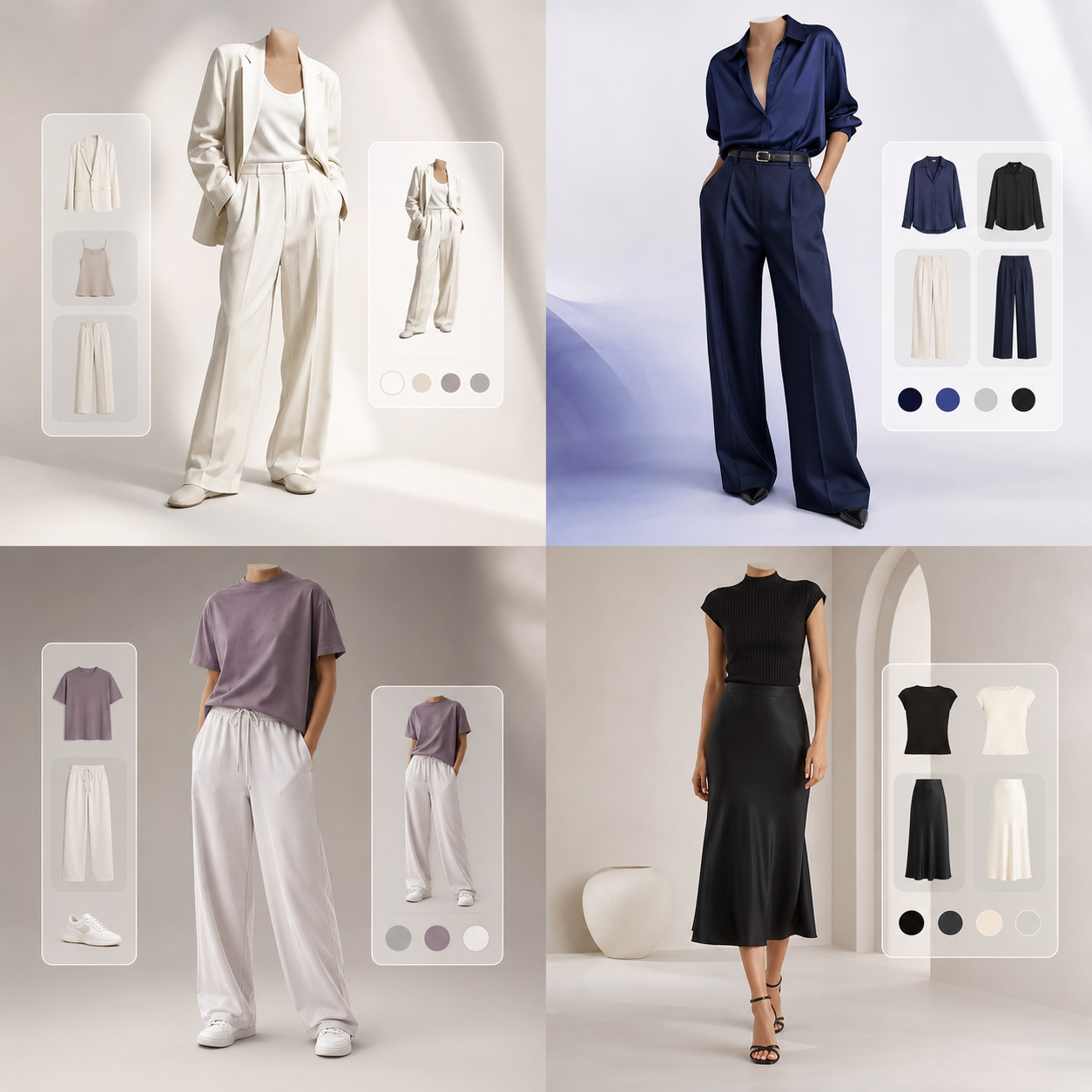
Beyond checking basic fit, virtual try-ons serve as an invaluable inspiration canvas. You can pair the warped puffer jacket with trousers, shoes, and layering options already in your wardrobe, testing styling combinations without stepping foot in a retail store. It builds closet synergy.
If you're unsure about coordinates, our conversational AI stylist provides guidance. Ask for pairing recommendations, and instantly render suggestions over your photo to find the perfect style. It curates custom lookbooks.
Layering outerwear over sweaters or tees is handled naturally by the AI blending engine. It checks overlap contours and draws natural shadows, outputting a polished styling card that you can share with friends for feedback.
Slashing Returns: The Sustainable Future of Shopping Puffer Jackets
Apparel returns generate massive carbon footprints. Sizing uncertainty causes return rates up to 40% in online fashion retail. Shoppers engage in "bracket buying"—ordering multiple sizes of the same shirt to try at home and returning the ones that fail. This back-and-forth transit triggers delivery vehicle emissions and packing waste.
Try It On cuts returns by enabling visually verified purchases the first time. Our virtual fitting room replaces sizing guesswork with clear visual evidence. Shoppers order with confidence, keeping the garments they receive and reducing logistics footprint.
Ultimately, circular retail aligns merchant profits with eco-conscious habits. By digitizing closets and testing catalog coordinates virtually, consumers shop with purpose, save credit balances, and support a clean, sustainable environment.
Optimizing Your Digital Dressing Room Experience
To achieve the absolute highest fidelity when rendering clothing virtually, understanding the interaction between camera angles and neural networks is essential. Our generative AI engine maps your body coordinates by identifying 24 key joints on your portrait. Stand straight, face the camera directly, and keep your camera at eye level (about 4 to 5 feet from the ground). Posing at high or low camera angles distorts body proportions, causing the warping engine to stretch sleeves or collars unnaturally on your generated preview cards.
Textile weight and density also play a critical role in visual simulations. Heavy fabrics like denim, structured leather, and thick wool are modeled with high rigidity boundaries. This means they retain their boxy silhouette shapes. Lightweight textiles like linen, silk, and stretch knits drape loosely, wrapping around your pose curves. If you are trying on structured outerwear, wear thin, form-fitting base clothes in your reference photo. Bulky base garments distort the coordinate detection, causing subsequent layers to appear too loose.
Lighting consistency is the final element that converts simple mockups into studio-grade lookbook assets. The generative model blends ambient light from your reference photo onto the garment texture, drawing realistic shadows along creases. For best results, capture your profile photo in soft, front-facing daylight. Avoid strong backlights or colorful room lights, as these distort the color theory matching and contrast balancing. With these simple setup steps, you can build a premium digital wardrobe playground, comparing outfits side-by-side and shopping with absolute visual confidence.
Organizing your digital wardrobe is the final step toward an optimized lifestyle. By logging your favorite shirts, trousers, and outerwear as digital assets, you build a playground for coordination. Our conversational AI fashion stylist is available 24/7 to suggest outfit pairings, check color harmony, and recommend seasonal trends. Sharing styling cards with friends for feedback turns online shopping into an interactive community experience, helping you build a versatile closet.